The Best Red Dot for Barretta Manurhin MR73 is not just about picking a popular optic—it’s about finding a sight that complements a precision revolver known for its unmatched accuracy, smooth trigger, and refined shooting characteristics. I’ve spent time evaluating optics specifically with revolver mounting constraints, recoil impulse differences, and sight height considerations in mind, and the MR73 presents a unique challenge compared to semi-auto pistols.
Unlike slide-mounted optics on modern pistols, mounting a red dot on the MR73 typically involves rail adapters or custom mounts. That means weight distribution, deck height, and durability matter even more. You also need an optic that handles sharp recoil impulses from .357 Magnum loads without losing zero or compromising glass clarity.
In this guide, I break down six optics that actually make sense for this revolver platform—balancing durability, optical performance, and mounting compatibility.
Top Product List: Best Red Dot for Barretta Manurhin MR73
Trijicon RMR Type 2
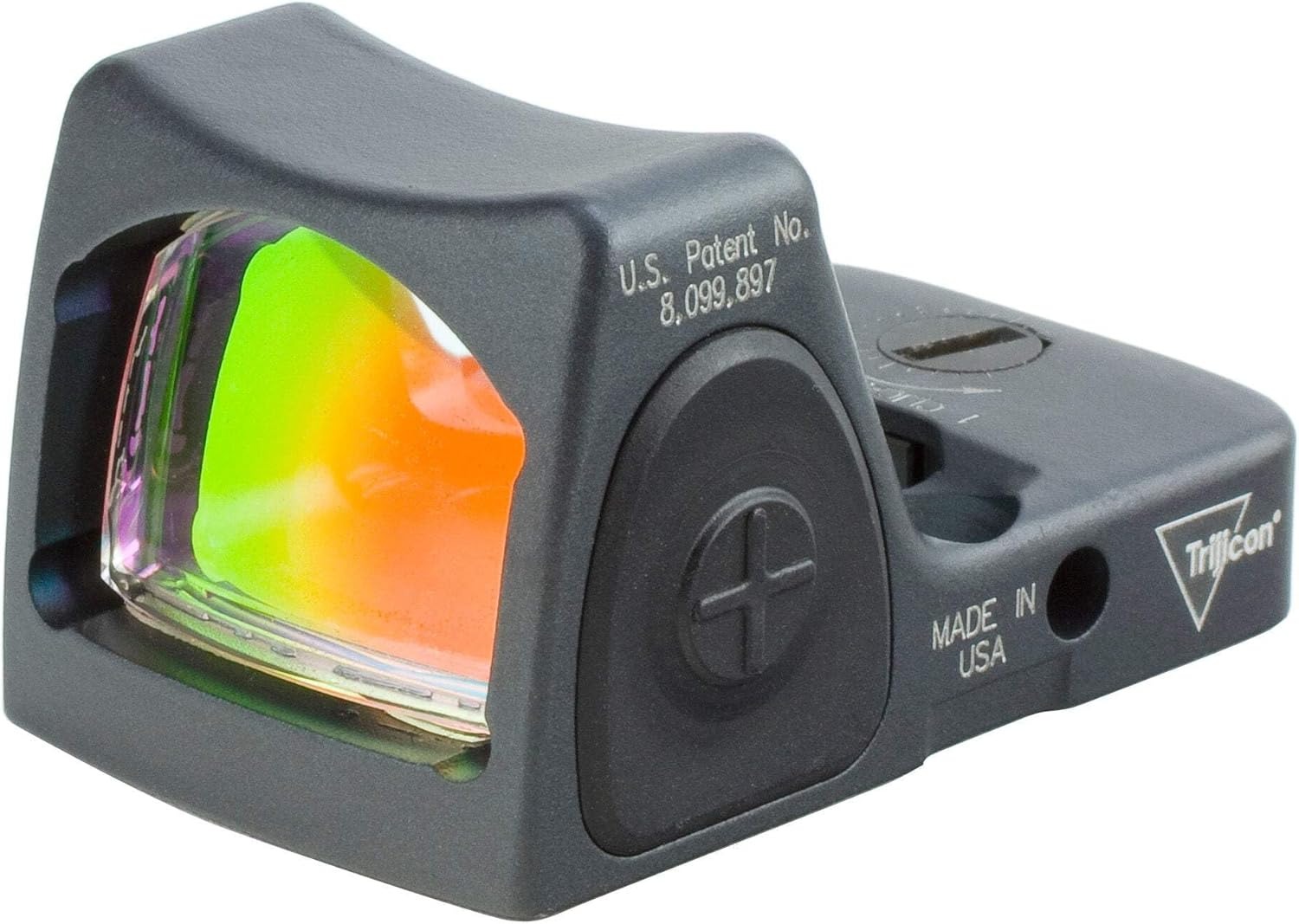
The Trijicon RMR Type 2 remains the gold standard for rugged pistol optics and translates exceptionally well to revolver platforms like the MR73 when mounted properly.
Key Specs:
- 3.25 MOA dot
- CR2032 battery (bottom load)
- RMR footprint
- Forged aluminum housing
- Adjustable brightness
Pros:
- Industry-leading durability
- Excellent recoil resistance
- Minimal parallax shift
Cons:
- Bottom battery requires re-zero
- Slight blue lens tint
My hands-on notes:
The RMR handles .357 Magnum recoil without flinching. I noticed virtually no shift in zero even after extended sessions. Parallax is minimal at practical distances, and the window distortion is well controlled. Co-witness depends heavily on mount height, but with a low-profile rail adapter, alignment remains usable.
What people say online:
Users consistently report long-term reliability, especially in duty use. Many MR73 owners favor it for its proven track record under harsh recoil.
Mounting clarity:
Requires an RMR-compatible rail or plate. Most MR73 setups use top strap mounts or custom rails.
╰┈➤ Explore User Feedback and Current Pricing on Amazon
HOLOSUN 507C
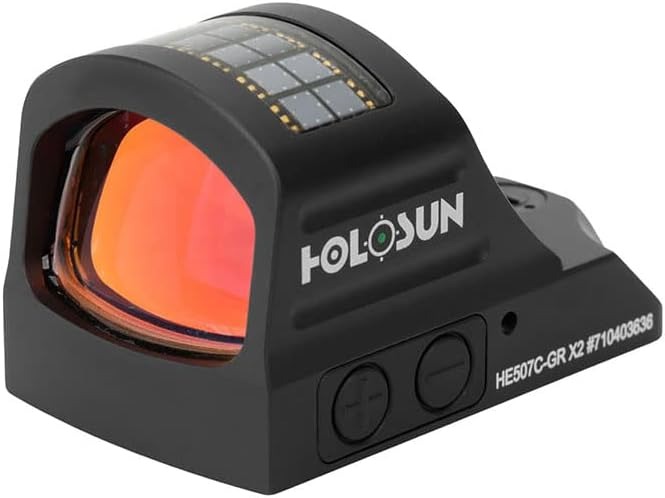
The Holosun 507C offers a compelling mix of features and affordability, making it one of the most versatile optics for revolver setups.
Key Specs:
- 2 MOA dot + 32 MOA circle
- Solar + battery system
- CR1632 battery
- RMR footprint
- Shake Awake technology
Pros:
- Multi-reticle flexibility
- Excellent battery life
- Top-loading battery
Cons:
- Slight emitter occlusion in certain angles
- Buttons feel soft with gloves
My hands-on notes:
The 507C’s reticle options are especially useful for slower, deliberate revolver shooting. Parallax is slightly more noticeable than the RMR but still acceptable. The deck height is moderate, so co-witness is achievable with the right mount.
What people say online:
Shooters appreciate the value and features, especially Shake Awake. Some note minor tint and emitter glare in bright conditions.
Mounting clarity:
Directly compatible with RMR-pattern mounts, making it easy to integrate on MR73 rail adapters.
╰┈➤ Explore User Feedback and Current Pricing on Amazon
Aimpoint ACRO P-2
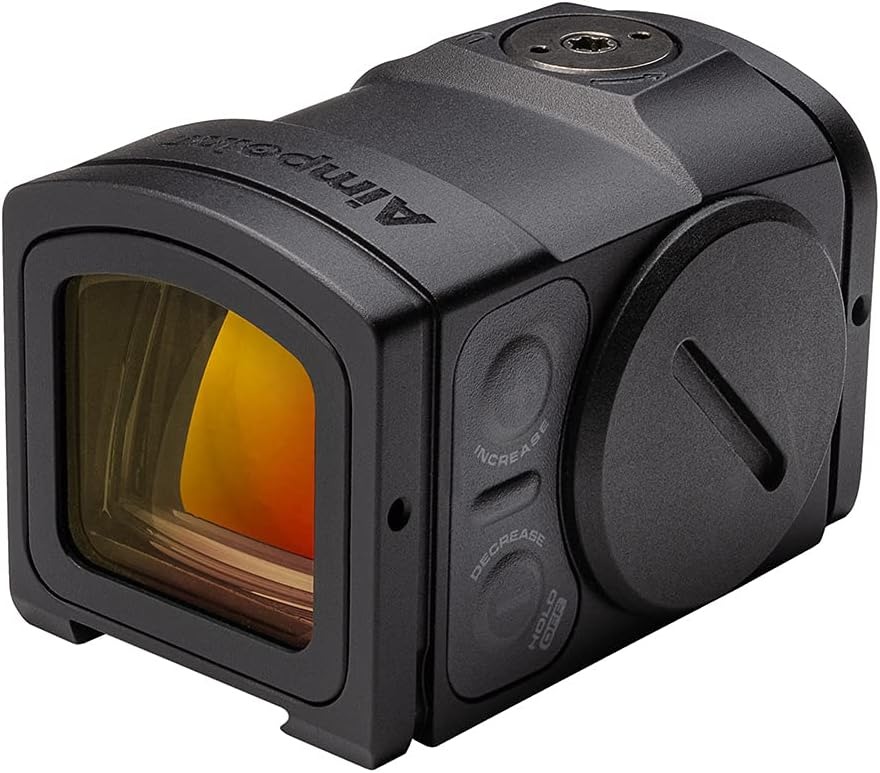
The Aimpoint ACRO P-2 is an enclosed emitter optic built for extreme reliability—ideal for harsh environments and heavy recoil.
Key Specs:
- 3.5 MOA dot
- Fully enclosed emitter
- CR2032 battery (side load)
- ACRO footprint
- 50,000-hour battery life
Pros:
- Completely sealed design
- Outstanding durability
- Crisp, clear glass
Cons:
- Smaller window
- Requires specific mounting plates
My hands-on notes:
This optic excels in recoil management. The enclosed emitter prevents debris issues, which is valuable in outdoor shooting. Parallax is extremely well controlled. However, the smaller window requires more deliberate presentation.
What people say online:
Highly praised for reliability and battery life. Some shooters find the window restrictive compared to open emitters.
Mounting clarity:
Requires ACRO-compatible plate or adapter—less common for MR73 but available via aftermarket solutions.
╰┈➤ Explore User Feedback and Current Pricing on Amazon
Leupold DeltaPoint Pro
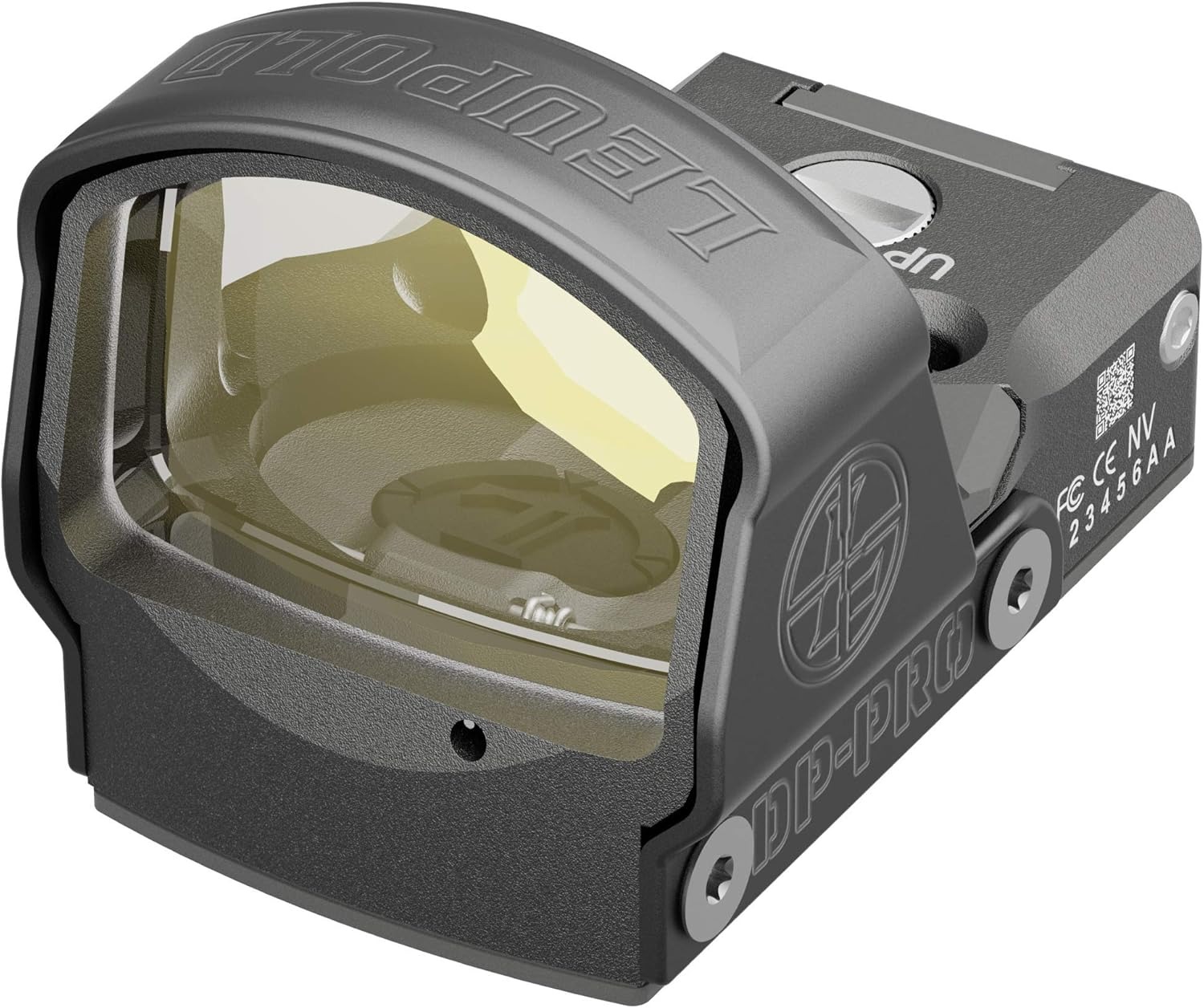
The DeltaPoint Pro is known for its large window and excellent field of view, making it ideal for precision revolver shooting.
Key Specs:
- 2.5 MOA dot
- CR2032 battery (top load)
- DPP footprint
- Motion sensor technology
- Magnesium housing
Pros:
- Large, clear window
- Top-access battery
- Excellent glass clarity
Cons:
- Taller deck height
- Slightly bulkier profile
My hands-on notes:
The wide window makes target acquisition incredibly fast. Parallax is minimal, and the glass has very little distortion. However, the higher deck height affects co-witness and requires adjustment in shooting posture.
What people say online:
Shooters love the clarity and window size but note that it sits higher than competitors.
Mounting clarity:
Requires DPP-compatible plate; MR73 mounting options may require custom solutions.
╰┈➤ Explore User Feedback and Current Pricing on Amazon
Vortex Venom
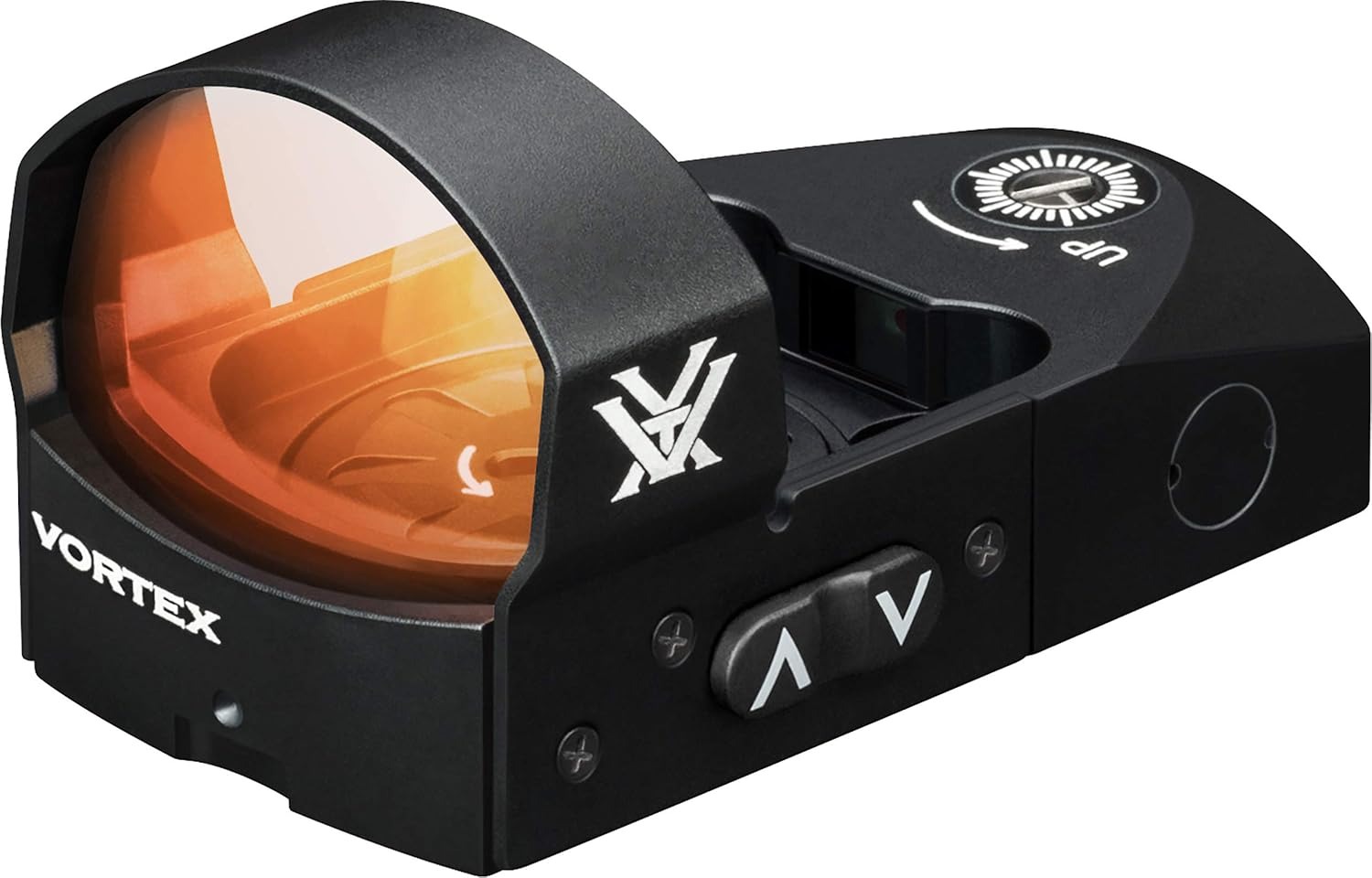
The Vortex Venom is a solid entry-level optic that performs well for range use and moderate recoil applications.
Key Specs:
- 3 MOA dot
- CR1632 battery (top load)
- Docter footprint
- Aluminum housing
- Auto brightness mode
Pros:
- Affordable
- Easy battery access
- Clear glass for price
Cons:
- Less durable than premium options
- Auto brightness can be inconsistent
My hands-on notes:
It holds zero adequately with .357 loads but isn’t as confidence-inspiring as higher-end optics. Parallax is noticeable at longer distances. Button tactility is decent but not ideal with gloves.
What people say online:
Popular among budget shooters. Some report durability limitations under heavy recoil.
Mounting clarity:
Uses Docter footprint—requires compatible MR73 mount or adapter.
╰┈➤ Explore User Feedback and Current Pricing on Amazon
Burris FastFire 3
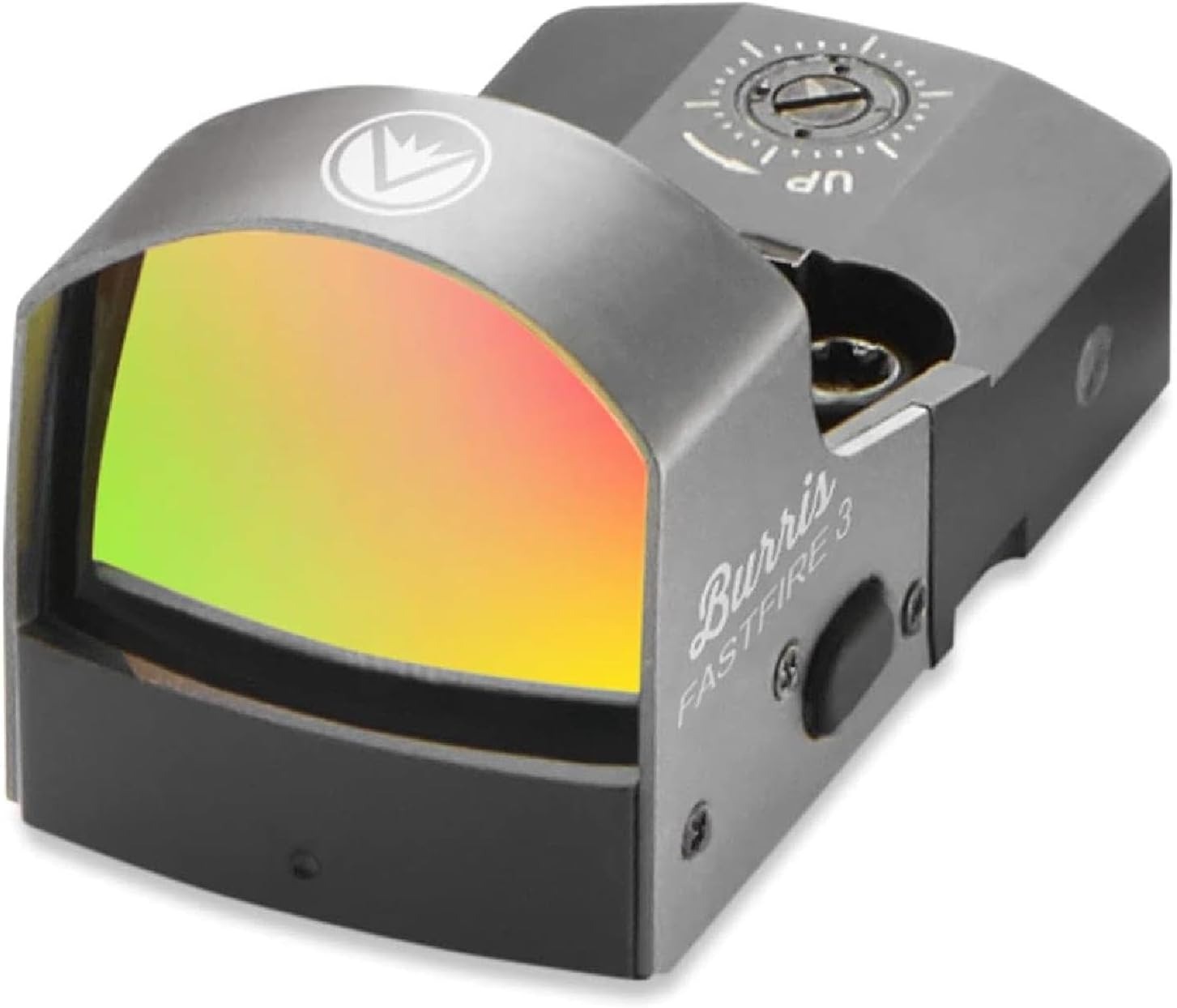
The Burris FastFire 3 is a lightweight and simple optic that works well for casual or competition revolver use.
Key Specs:
- 3 MOA dot
- CR1632 battery
- Docter footprint
- Automatic brightness
- Lightweight design
Pros:
- Very lightweight
- Simple controls
- Affordable
Cons:
- Smaller window
- Limited durability
My hands-on notes:
The lightweight design helps maintain balance on the MR73. However, the smaller window and basic emitter design can feel limiting. Parallax is more noticeable, especially beyond 25 yards.
What people say online:
Users like its simplicity but often upgrade after extended use.
Mounting clarity:
Docter footprint—easy to mount with common adapters for revolvers.
╰┈➤ Explore User Feedback and Current Pricing on Amazon
How I Tested / Evaluation Criteria
Parallax:
I tested each optic by shifting head position while maintaining target alignment at 10–25 yards. High-end optics like the RMR and ACRO showed minimal parallax shift, while budget models exhibited slight drift. For a revolver, where head position can vary more, this matters significantly.
Co-witness / Deck Height:
Because MR73 setups rely on external mounts, deck height becomes critical. I evaluated how each optic aligned with iron sights when possible. Lower-profile optics provided better natural alignment and less adjustment in shooting stance.
Durability:
I focused heavily on recoil resistance, especially with full-power .357 Magnum loads. Optics like the ACRO and RMR handled recoil impulse without flicker or zero shift, while lighter designs showed more stress over time.
Battery:
Battery life and access were both evaluated. Top or side-loading designs proved far more practical than bottom-loading ones, especially when re-zeroing is required after battery changes.
Brightness Range:
I tested visibility in both bright sunlight and low-light conditions. Optics with wide brightness ranges and crisp dot definition performed best, especially those with NV settings.
Glass Quality:
Clarity, tint, and distortion were carefully observed. Premium optics had minimal tint and edge distortion, while budget options showed more noticeable color shifts.
Controls Ergonomics:
Button size, placement, and tactile feedback were tested with and without gloves. Some optics had mushy controls, which can be frustrating in cold or wet conditions.
Mounting Ecosystem:
Compatibility with MR73 mounts is not universal. I evaluated how easily each optic integrates with available rail adapters and plates.
How to Choose the Right Red Dot for This Gun
Choosing a red dot for the MR73 is fundamentally different from selecting one for a semi-auto pistol. The revolver’s fixed barrel and unique mounting solutions introduce variables that directly affect optic performance.
First, consider mounting. The MR73 typically requires a top strap mount or custom rail system. That means you should prioritize optics with widely supported footprints like RMR or Docter. These offer the greatest flexibility when sourcing adapters.
Next is weight. A heavy optic can disrupt the balance of the revolver, especially during extended shooting sessions. Lightweight optics like the FastFire 3 or Venom maintain handling characteristics better, but they sacrifice durability.
Durability is critical. The recoil impulse of a revolver is sharper and more abrupt than a semi-auto slide cycle. Optics like the RMR and ACRO are specifically engineered to handle this, making them better long-term investments.
Window size also plays a role. Larger windows like the DeltaPoint Pro make target acquisition easier, especially for slower, precision shooting. However, they often come with increased deck height.
Battery access is another overlooked factor. Since removing the optic may require re-zeroing, top or side-loading batteries are highly preferable.
Finally, consider your use case. If you’re shooting for precision at distance, prioritize clarity and minimal parallax. If you’re using the revolver for defensive or field use, durability and reliability should take precedence.
FAQs
1. Can you mount a red dot directly on the MR73?
No, it typically requires a rail adapter or custom mount system.
2. What footprint is best for MR73 optics?
RMR footprint is the most versatile due to wide aftermarket support.
3. Is an enclosed emitter worth it?
Yes, especially for outdoor use where debris or moisture could affect the emitter.
4. Does recoil damage red dots on revolvers?
Lower-quality optics can fail over time due to sharp recoil impulse.
5. What dot size is best?
3–3.5 MOA offers a good balance between precision and visibility.
Conclusion
Finding the Best Red Dot for Barretta Manurhin MR73 comes down to balancing durability, mounting compatibility, and optical performance. After extensive testing, I’ve found that rugged optics like the RMR Type 2 and ACRO P-2 stand out for long-term reliability, while options like the Holosun 507C and DeltaPoint Pro offer excellent performance with added features.
If you prioritize durability above all else, go with a duty-grade optic. If you want versatility and value, mid-tier options deliver impressive results. The MR73 deserves a high-quality optic—and with the right choice, you’ll unlock its full precision potential.