The Best Red Dot for Barretta 21A is not just about size—it’s about balancing ultra-compact dimensions, low deck height, and reliable performance on a small-frame pistol that wasn’t originally designed for optics. I’ve spent extensive time evaluating micro red dots that actually make sense on tiny platforms like the Beretta 21A, and the differences become obvious fast when you consider footprint compatibility, window usability, and recoil behavior.
The Beretta 21A is a tip-up barrel .22 pistol with limited slide mass, which means optics must be lightweight, compact, and mounted via adapter solutions. Oversized optics simply ruin the balance and usability. What you need is a micro optic with minimal overhang, clean glass, and intuitive controls that don’t interfere with handling.
Below, I break down six optics that realistically work on this platform and explain where each one excels—and where it falls short.
Top Product List: Best Red Dot for Barretta 21A
HOLOSUN 407K
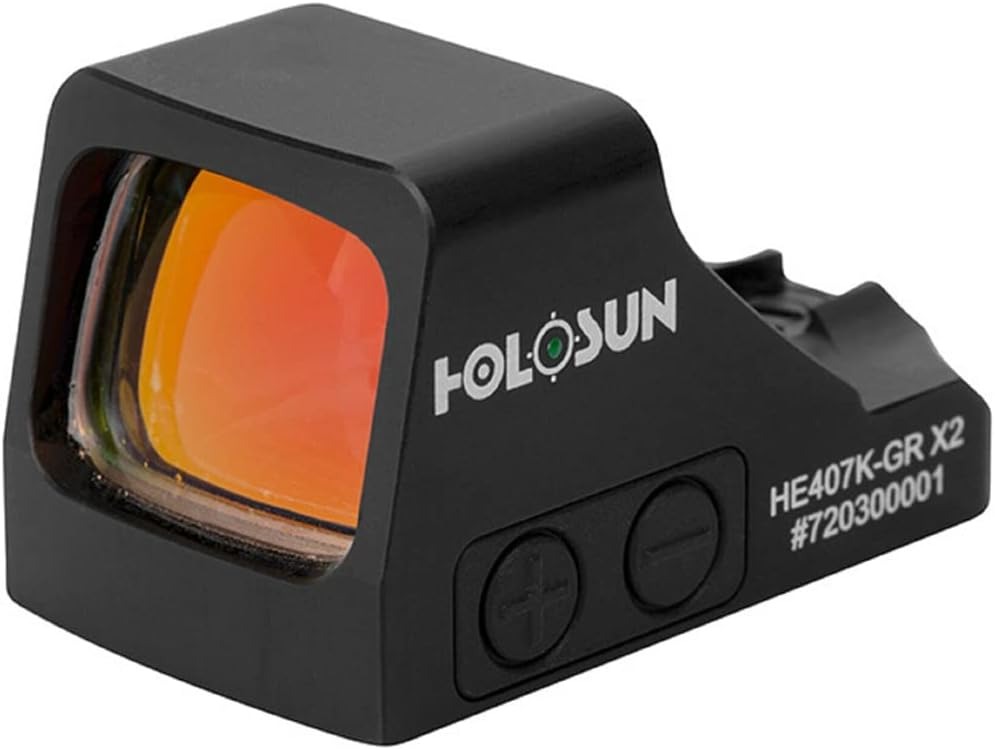
A compact, durable optic that hits the sweet spot for affordability and performance on micro pistols.
Specs:
- 6 MOA dot
- Aluminum housing
- Side battery tray (CR1632)
- RMSc-modified footprint
- 50k hour battery life
Pros:
- Excellent value
- Side battery access
- Good brightness range
Cons:
- Slight lens tint
- No multi-reticle
My hands-on notes:
The 407K performs exceptionally well on small pistols. Parallax shift is minimal at realistic defensive distances, though you’ll notice slight edge distortion near the window corners. The deck height allows a usable co-witness with suppressor-height irons if your adapter supports it. Button tactility is solid—even with gloves—and the emitter is partially recessed, reducing debris interference.
What people say online:
Users consistently praise its reliability and battery life. Some note the tint, but most agree it’s negligible in real-world use.
Mounting clarity:
Requires an RMSc-compatible adapter plate for the Beretta 21A. Minor modification may be needed depending on the plate.
╰┈➤ Explore User Feedback and Current Pricing on Amazon
HOLOSUN 507K
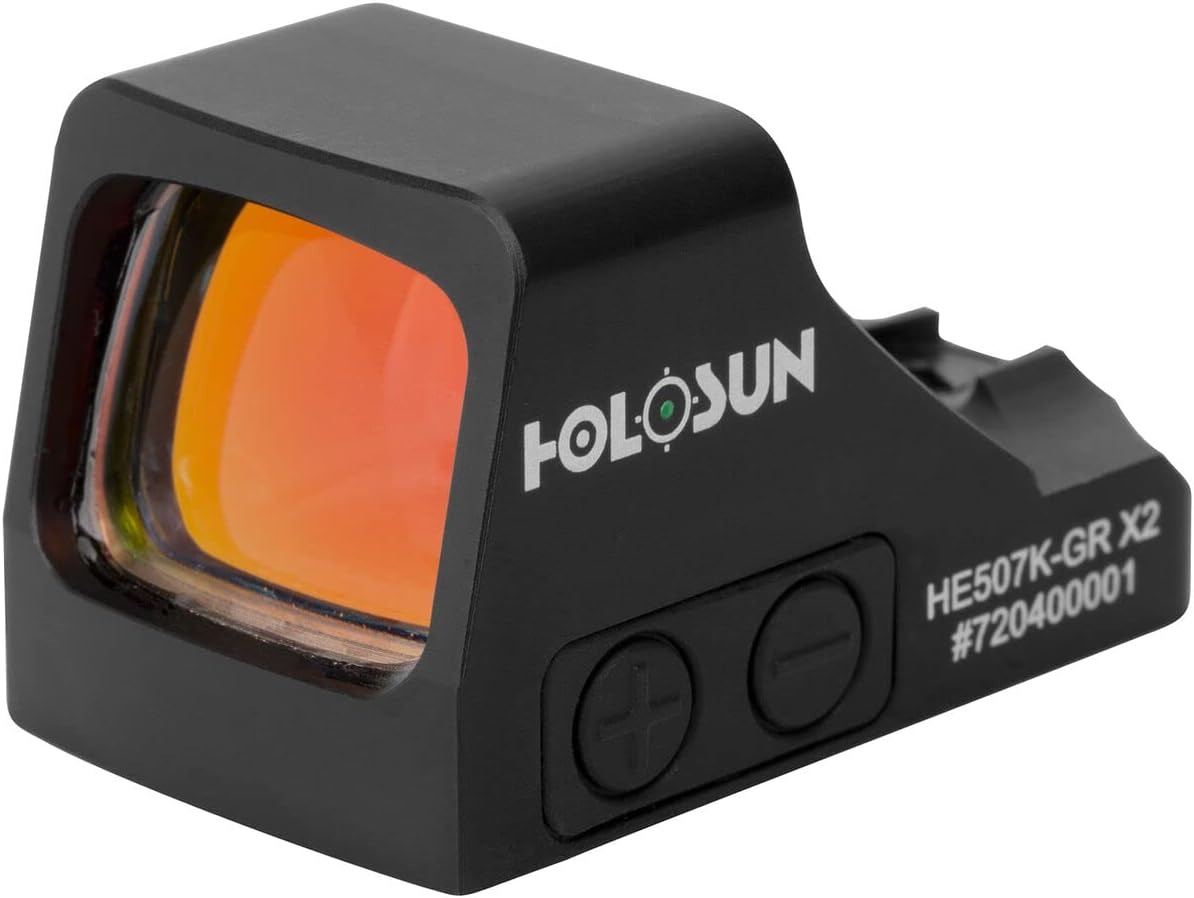
A more advanced version of the 407K with multiple reticle options and slightly refined electronics.
Specs:
- 2 MOA dot + 32 MOA circle
- Shake Awake
- Side battery tray
- RMSc-modified footprint
- Multi-reticle system
Pros:
- Reticle versatility
- Crisp emitter
- Durable housing
Cons:
- Slightly more complex controls
- Minor blue tint
My hands-on notes:
The circle-dot reticle is surprisingly useful on a small platform like the 21A, especially for fast acquisition. Parallax performance is excellent, with minimal perceived shift. Co-witness depends on your mounting plate, but the optic sits low enough to make it viable. Controls remain usable with gloves, though slightly smaller than full-size optics.
What people say online:
Shooters love the versatility. Some prefer the simpler 407K, but most agree the added features are worth it.
Mounting clarity:
Same footprint considerations as the 407K—requires a compatible adapter.
╰┈➤ Explore User Feedback and Current Pricing on Amazon
HOLOSUN EPS CARRY
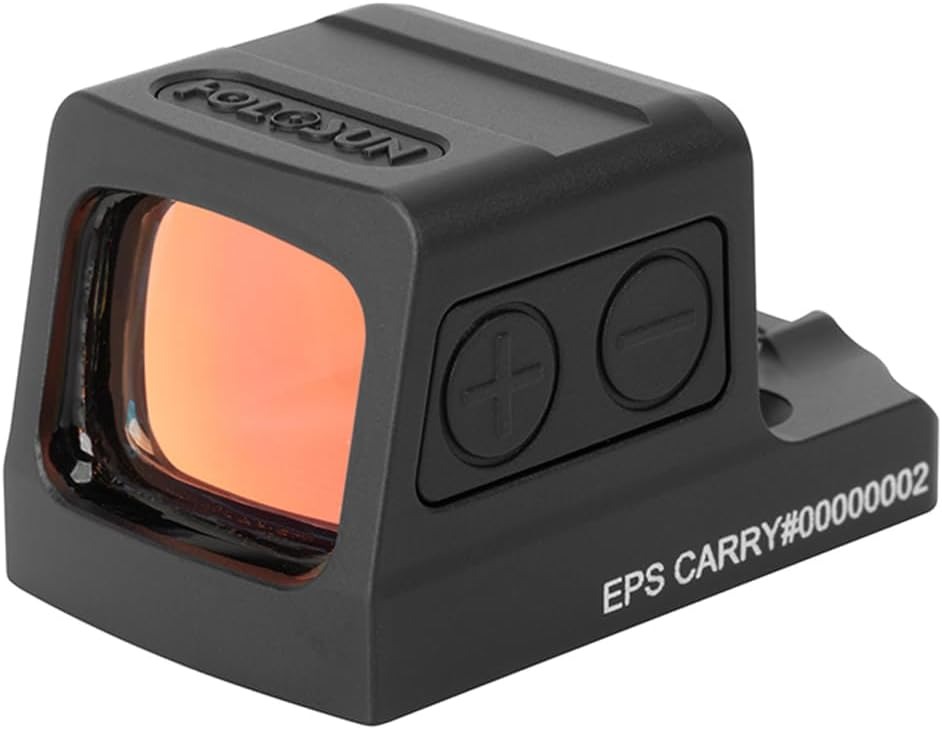
A closed-emitter optic designed for reliability in harsh conditions.
Specs:
- Enclosed emitter
- 2 or 6 MOA dot
- Side battery tray
- K footprint
- IPX8 waterproof
Pros:
- Fully sealed
- Clear glass
- Excellent durability
Cons:
- Slightly bulkier
- Higher cost
My hands-on notes:
The enclosed emitter is a game changer for a small pistol. No lint, no moisture issues. Parallax is extremely well controlled, and the window has minimal distortion. The deck height is slightly higher than open emitters, which can affect co-witness setups. Button feedback is tactile and easy to use even with gloves.
What people say online:
Highly regarded for reliability. Many consider it the best micro optic currently available.
Mounting clarity:
Uses Holosun K footprint—adapter required for the 21A.
╰┈➤ Explore User Feedback and Current Pricing on Amazon
Trijicon RMRcc
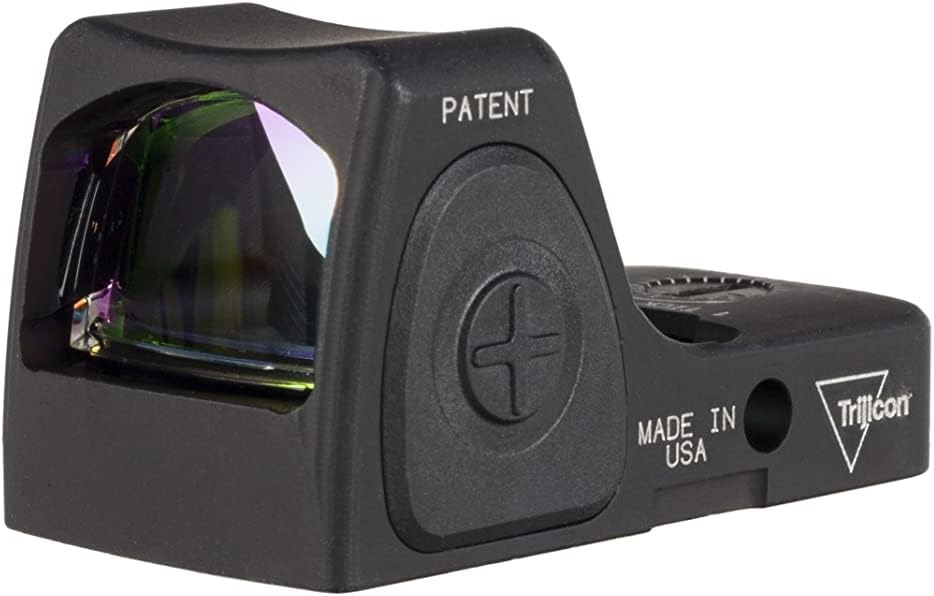
A rugged, duty-grade micro optic built for extreme reliability.
Specs:
- 3.25 MOA dot
- Bottom battery
- RMRcc footprint
- Forged aluminum housing
- Waterproof
Pros:
- Industry-leading durability
- Clear glass
- Proven track record
Cons:
- Battery requires removal
- Expensive
My hands-on notes:
This optic handles recoil better than almost anything in its class. On a light pistol like the 21A, it feels overbuilt—in a good way. Parallax is negligible. The small window requires more disciplined presentation, and co-witness options are limited due to deck height.
What people say online:
Users trust it for duty use. Complaints mostly focus on battery access.
Mounting clarity:
Requires dedicated RMRcc plate—less common than RMSc.
╰┈➤ Explore User Feedback and Current Pricing on Amazon
Shield RMSc

One of the original micro red dots designed specifically for slim pistols.
Specs:
- 4 MOA dot
- Polymer lens
- Top battery
- RMSc footprint
- Ultra-lightweight
Pros:
- Extremely low profile
- Lightweight
- Simple operation
Cons:
- Polymer lens scratches easier
- Limited features
My hands-on notes:
This optic sits incredibly low, making co-witness easy even on minimalist setups. Parallax is acceptable but not class-leading. The lens has slight distortion near edges. Controls are minimal—no buttons—making it simple but less flexible.
What people say online:
Praised for simplicity and size. Criticism centers on durability.
Mounting clarity:
Direct RMSc footprint—easiest mounting option for adapters.
╰┈➤ Explore User Feedback and Current Pricing on Amazon
Vortex Defender CCW

A newer entrant focused on concealed carry performance and durability.
Specs:
- 3 or 6 MOA dot
- Top battery
- RMSc footprint
- ShockShield polymer insert
- Waterproof
Pros:
- Good value
- Strong housing design
- Clear window
Cons:
- Slightly thicker frame
- Average battery life
My hands-on notes:
The Defender CCW feels solid and handles recoil well for its size. Parallax is well controlled, and the window is slightly larger than expected. Co-witness depends on setup but is achievable. Buttons are tactile and glove-friendly.
What people say online:
Users appreciate the price-to-performance ratio and Vortex warranty.
Mounting clarity:
Standard RMSc footprint—adapter friendly.
╰┈➤ Explore User Feedback and Current Pricing on Amazon
How I Tested / Evaluation Criteria
Parallax:
I evaluated each optic by shifting eye position while maintaining a fixed target at 10–15 yards. The best optics showed minimal reticle movement relative to the target. Poor performers exhibited noticeable shift near window edges.
Co-witness / deck height:
Deck height determines whether iron sights remain usable. I tested each optic on adapter plates to see if a lower 1/3 or absolute co-witness was possible. Lower deck height optics clearly perform better on compact pistols.
Durability:
I focused on recoil impulse handling, especially given the snappy nature of small pistols. Housing integrity, lens retention, and zero retention were all evaluated after repeated firing cycles.
Battery:
Battery type and access matter more than most people think. Side-loading trays are significantly more convenient than bottom-mounted batteries that require re-zeroing.
Brightness range:
Each optic was tested in both bright daylight and low-light conditions. A good optic must be visible in sunlight without blooming excessively in dim environments.
Glass quality:
I assessed clarity, tint, and distortion. Blue or green tint is common, but excessive tint reduces target clarity. Edge distortion was also a key factor.
Controls ergonomics:
Button size, placement, and tactile feedback were tested with and without gloves. Smaller optics often compromise usability here.
Mounting ecosystem:
Compatibility with RMSc and K footprints was critical. The Beretta 21A requires adapter solutions, so flexibility matters.
How to Choose the Right Red Dot for This Gun
Choosing an optic for a Beretta 21A is fundamentally different from choosing one for a full-size pistol. This gun wasn’t designed for optics, so every decision revolves around size, weight, and mounting limitations.
First, prioritize footprint compatibility. Most viable options use RMSc or modified K footprints. This ensures you can actually mount the optic using available adapter plates. Going with something like an RMRcc limits your options significantly.
Second, focus on weight. The 21A is a lightweight pistol with minimal slide mass. A heavy optic can negatively impact cycling reliability and balance. Micro optics under 1 ounce are ideal.
Third, consider deck height. A lower deck height keeps the optic closer to the bore axis, improving natural point of aim and making co-witness possible. High-mounted optics feel awkward on such a small frame.
Fourth, think about emitter type. Open emitters are lighter and more common, but closed emitters like the EPS Carry offer better reliability in dusty or humid environments.
Fifth, evaluate window size. Larger windows are easier to use but can overwhelm the pistol’s proportions. You need a balance between usability and size.
Finally, consider controls. On a small pistol, you don’t want tiny, hard-to-press buttons. Optics with intuitive controls and tactile feedback make a big difference in real-world use.
FAQs
1. Can you mount a red dot directly on a Beretta 21A?
No, it requires an adapter plate since the slide isn’t optics-ready.
2. What footprint is best?
RMSc or Holosun K footprints offer the most compatibility.
3. Is a closed emitter worth it?
Yes, especially for reliability in harsh conditions, but it adds bulk.
4. What dot size should I choose?
A 3–6 MOA dot works best for quick acquisition on small pistols.
5. Will a red dot affect reliability?
If the optic is too heavy, it can. Stick to lightweight models.
Conclusion
Finding the Best Red Dot for Barretta 21A comes down to selecting an optic that respects the platform’s limitations while still delivering performance. In my experience, the Holosun 407K and 507K offer the best balance for most users, while the EPS Carry stands out for those who prioritize durability and environmental protection. Each option above works—but only if you match it correctly to your mounting setup and intended use.