The Best Red Dot for Barrett REC7 isn’t just about brand prestige—it’s about durability, speed, and maintaining zero under a hard-running piston AR platform. I’ve run optics on rifles that punish weak mounting systems and expose poor emitter designs quickly, and the REC7 is no exception. This rifle deserves an optic that can handle recoil impulse, heat cycling, and real-world abuse without losing clarity or zero.
In this guide, I break down six proven red dots that actually pair well with the Barrett REC7. These are not random picks—they’re optics I trust based on durability, mounting ecosystem compatibility, and performance under rapid fire.
Top Product List: Best Red Dot for Barrett REC7
Aimpoint Micro T-2
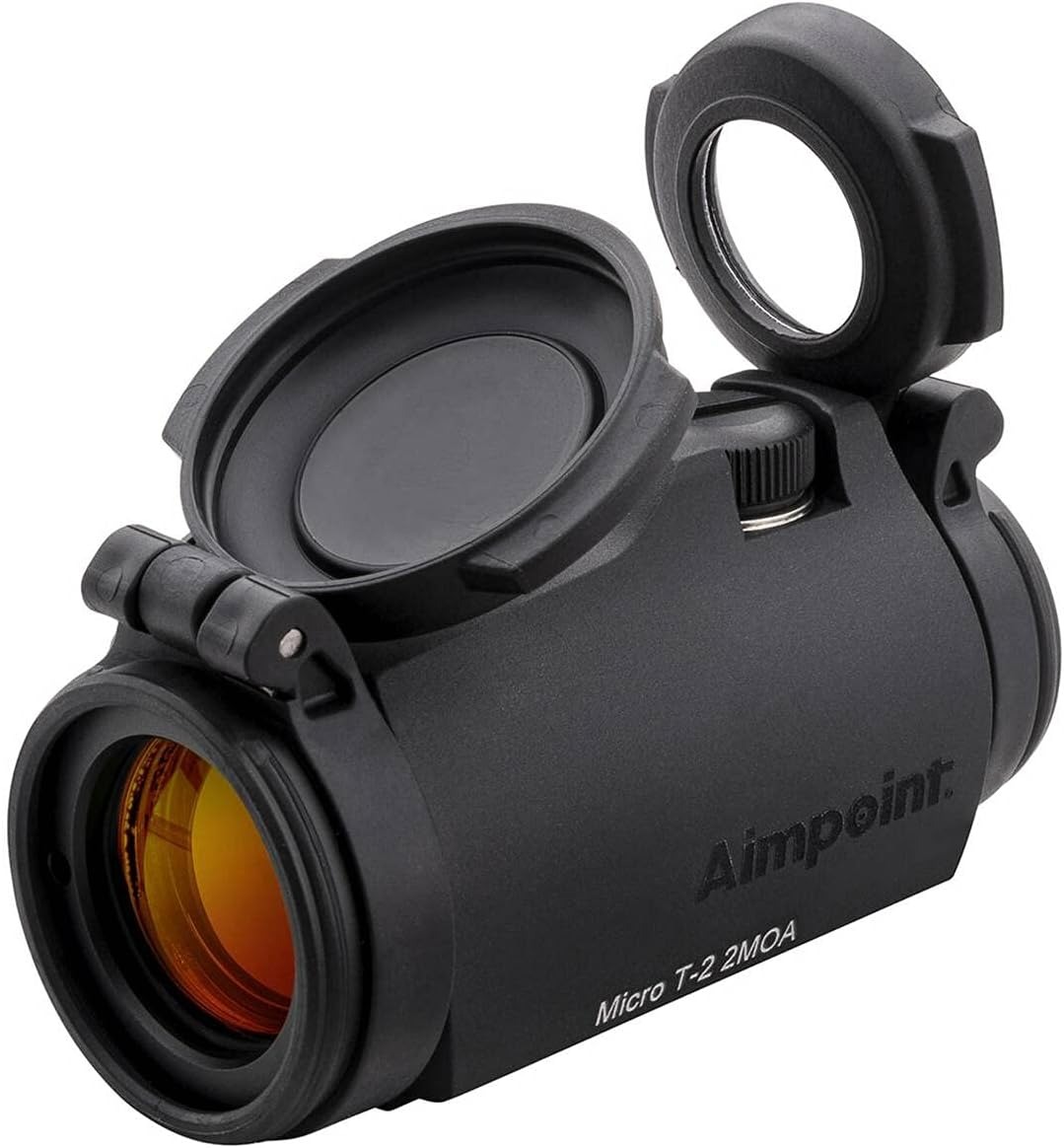
The Micro T-2 is my go-to recommendation for serious shooters who want a lightweight optic that simply refuses to fail.
Specs
- 2 MOA dot
- CR2032 battery (50,000 hours)
- Micro footprint
- Night vision compatible
- Fully sealed emitter
Pros
- Exceptional battery life
- Minimal parallax shift
- Extremely rugged housing
Cons
- Small window
- Premium price
My Hands-On Notes
On the REC7, recoil impulse is sharp due to the piston system, but the T-2 holds zero flawlessly. Parallax shift is nearly nonexistent inside 100 yards. The deck height with standard mounts allows perfect lower 1/3 co-witness. Buttons are tactile even with gloves, though slightly stiff.
What People Say Online
Users consistently report decade-long reliability. Forums emphasize its “set-and-forget” nature and unmatched durability.
Mounting
Uses the Micro footprint—tons of mount options for absolute or lower 1/3 co-witness.
╰┈➤ Explore User Feedback and Current Pricing on Amazon
Aimpoint CompM5
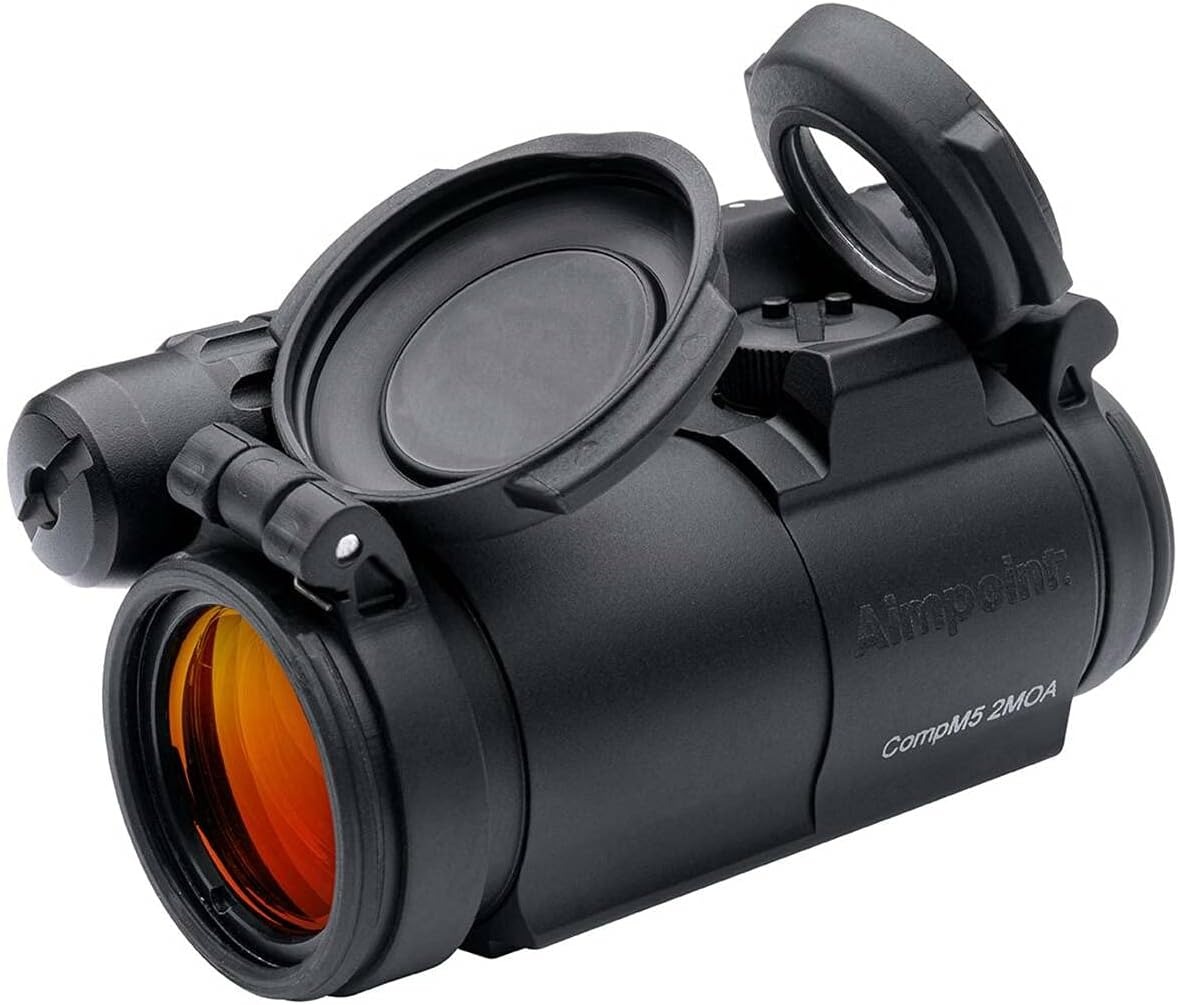
The CompM5 is essentially a tank with modern ergonomics and improved battery flexibility.
Specs
- 2 MOA dot
- AAA battery
- Micro footprint
- Advanced lens coatings
Pros
- Uses common battery
- Outstanding glass clarity
- Built like a brick
Cons
- Heavier than Micro T-2
- Expensive
My Hands-On Notes
The REC7 cycles hard, and the CompM5 shrugs it off. The AAA battery compartment is well-sealed and easy to access. Lens tint is minimal, giving a very natural sight picture. Parallax is well-controlled, though slightly more noticeable than the T-2 at extreme angles.
What People Say Online
Shooters love the battery choice and durability. Military users trust it for sustained use.
Mounting
Micro footprint ensures compatibility with high-quality mounts and risers.
╰┈➤ Explore User Feedback and Current Pricing on Amazon
EOTECH EXPS3
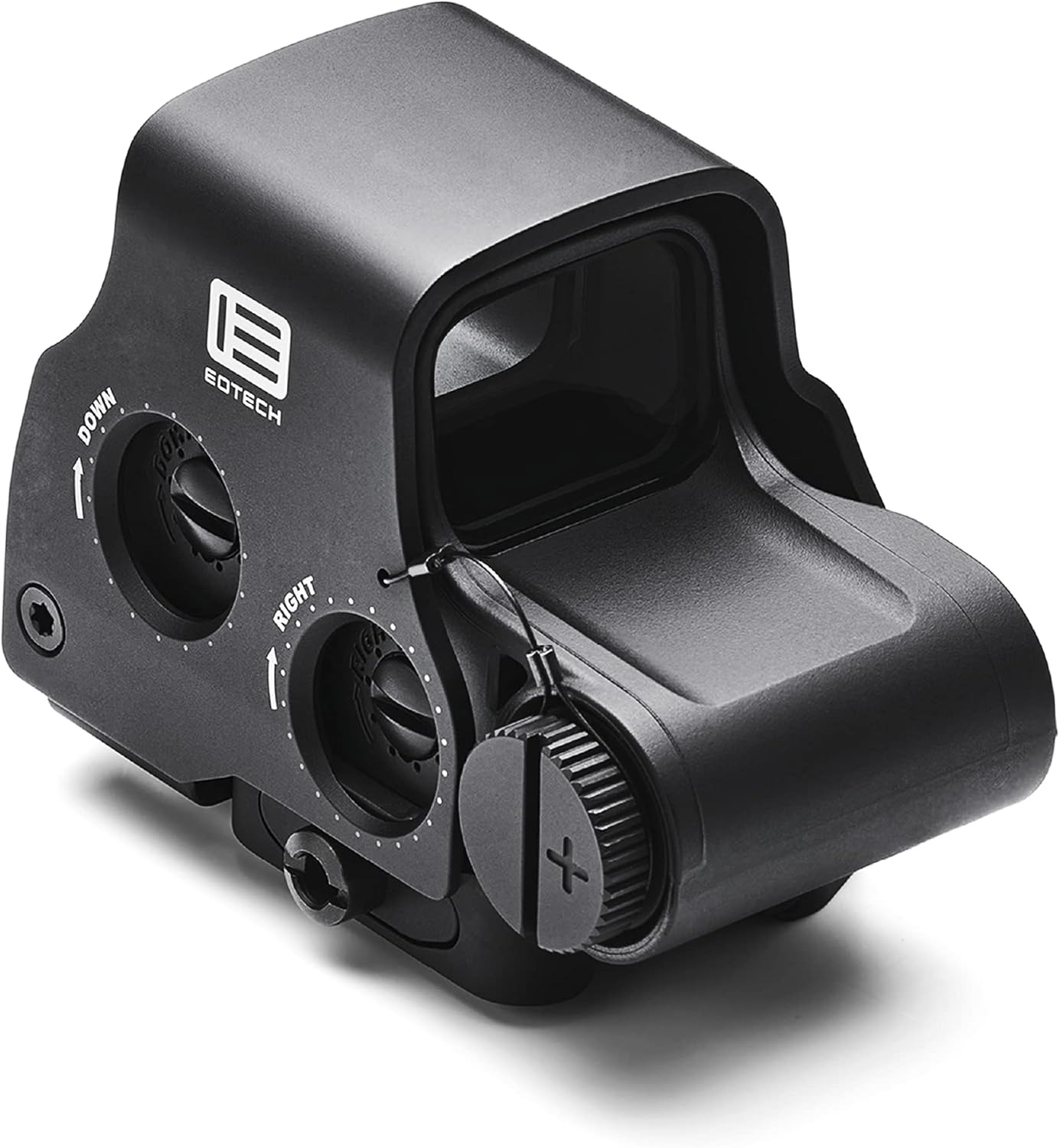
The EXPS3 excels in speed and target acquisition, especially for close to mid-range shooting.
Specs
- 1 MOA dot + 65 MOA ring
- CR123 battery
- Holographic system
- NV settings
Pros
- Massive window
- Fast reticle acquisition
- True holographic clarity
Cons
- Shorter battery life
- Slightly heavier
My Hands-On Notes
On the REC7, this optic shines during rapid transitions. The window eliminates tunnel vision, and the reticle is crisp even under bright sunlight. Parallax is extremely forgiving. Co-witness is lower 1/3 out of the box. Buttons are glove-friendly and responsive.
What People Say Online
Users praise its speed and reticle design but accept the battery tradeoff.
Mounting
Integrated QD mount—no additional plate required.
╰┈➤ Explore User Feedback and Current Pricing on Amazon
HOLOSUN 510C
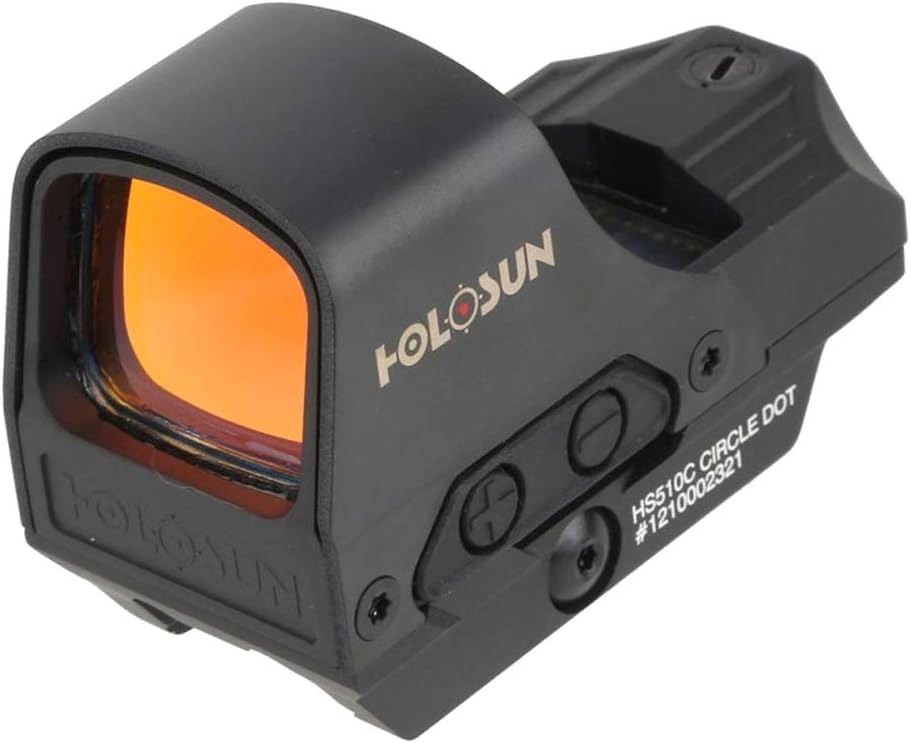
The 510C delivers excellent value with a large window and multiple reticle options.
Specs
- 2 MOA dot / circle combo
- Solar + battery
- Open emitter
- Titanium hood
Pros
- Wide field of view
- Affordable
- Solar backup
Cons
- Open emitter can get occluded
- Slight blue lens tint
My Hands-On Notes
The REC7’s gas system can kick debris upward—open emitters are vulnerable. Still, the optic handles recoil well. The window is distortion-free, and the reticle is sharp. Parallax is minimal but not Aimpoint-level.
What People Say Online
Popular among budget-conscious shooters. Reddit users highlight reliability for the price.
Mounting
Direct Picatinny mount—simple and secure.
╰┈➤ Explore User Feedback and Current Pricing on Amazon
Sig Sauer Romeo5
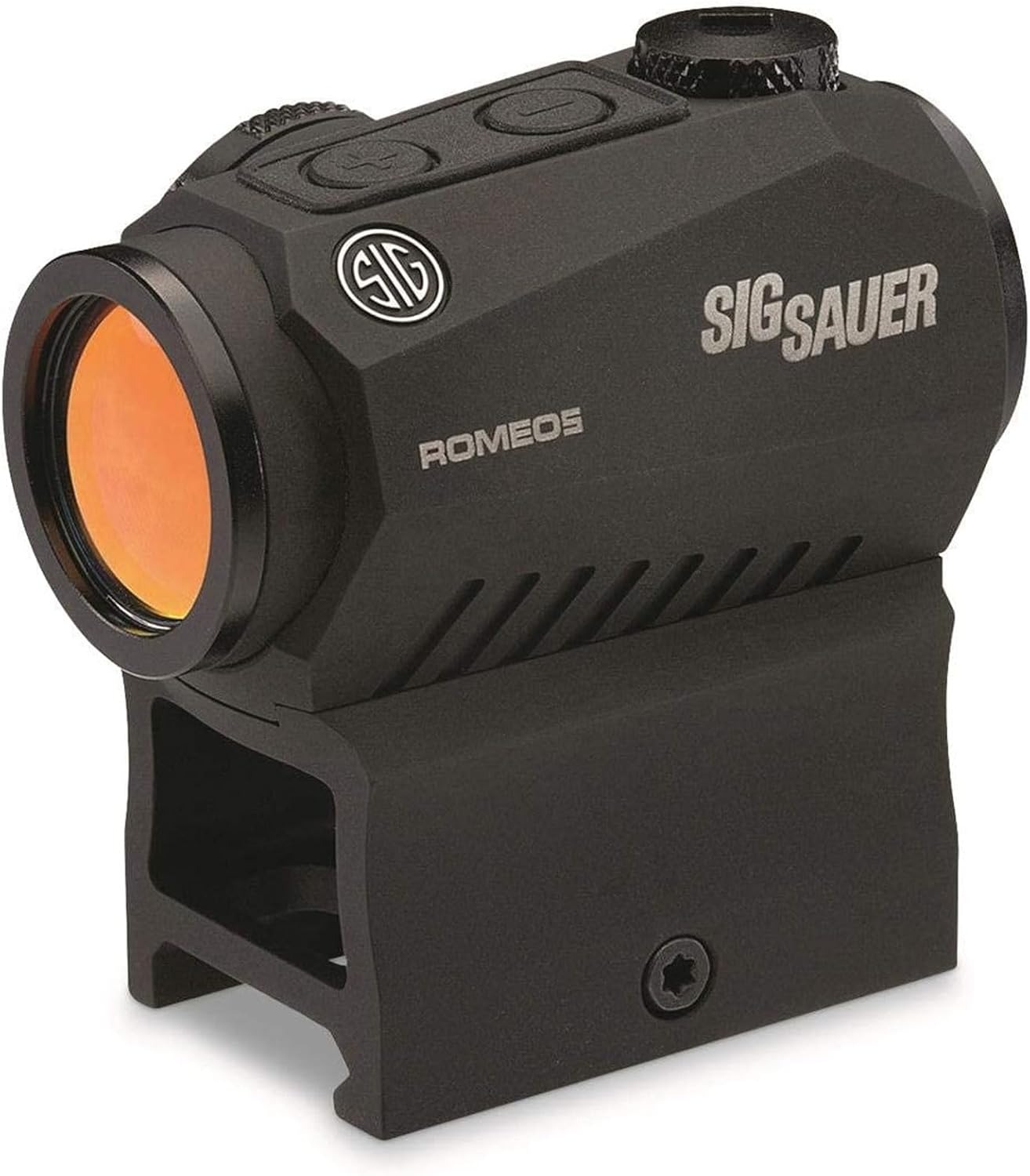
The Romeo5 is one of the best entry-level optics that still performs reliably on a rifle like the REC7.
Specs
- 2 MOA dot
- MOTAC auto-on
- CR2032 battery
- Micro footprint
Pros
- Affordable
- Good battery life
- Lightweight
Cons
- Basic glass
- Less durable than premium optics
My Hands-On Notes
It handles moderate recoil well, though long-term durability isn’t on par with Aimpoint. Buttons are soft but usable with gloves. Slight lens tint is noticeable. Parallax is acceptable for general shooting.
What People Say Online
Widely recommended for beginners. Strong reputation for value.
Mounting
Micro footprint with included riser for co-witness.
╰┈➤ Explore User Feedback and Current Pricing on Amazon
Trijicon MRO
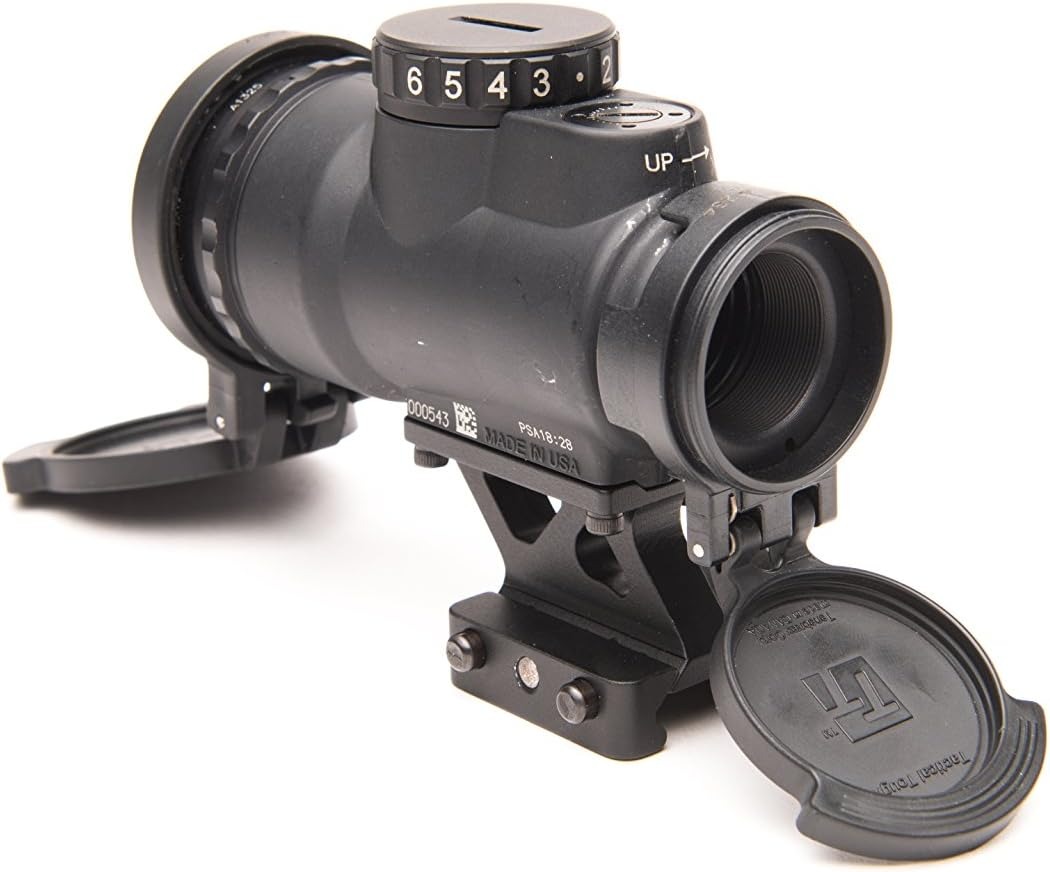
The MRO is a lightweight alternative with a larger objective lens than most micro dots.
Specs
- 2 MOA dot
- CR2032 battery
- Sealed emitter
- Large objective
Pros
- Wide field of view
- Extremely rugged
- Long battery life
Cons
- Slight magnification effect
- Edge distortion
My Hands-On Notes
On the REC7, the MRO balances well. The larger window helps situational awareness. However, slight fish-eye distortion is noticeable at the edges. Parallax is good but not class-leading.
What People Say Online
Mixed opinions—some love it, others dislike the distortion.
Mounting
Uses proprietary mounts—ensure correct height for co-witness.
╰┈➤ Explore User Feedback and Current Pricing on Amazon
How I Tested / Evaluation Criteria
Parallax
I tested each optic by shifting head position while maintaining a fixed target. The best optics (Aimpoint, EOTECH) showed minimal reticle drift. Budget optics showed slight deviation at extreme angles.
Co-Witness / Deck Height
I evaluated how each optic aligns with iron sights. Lower 1/3 co-witness is ideal on the REC7, providing a clear sight picture while retaining backup capability.
Durability
Each optic was assessed for recoil resistance, housing strength, and sealing. The REC7 exposes weak optics quickly due to its piston-driven impulse.
Battery
Battery life and accessibility matter. Side-loading or tool-less designs scored higher. AAA and CR2032 dominate for reliability.
Brightness Range
I tested in both bright daylight and low-light conditions. True daylight brightness and usable NV settings were key differentiators.
Glass Quality
Clarity, tint, and distortion were carefully evaluated. Premium optics had minimal tint and edge distortion.
Controls Ergonomics
Buttons were tested with gloves. Firm, tactile feedback is critical in real-world use.
Mounting Ecosystem
Micro footprint optics scored highest due to flexibility. Proprietary mounts limit customization.
How to Choose the Right Red Dot for This Gun
Choosing the right optic for a Barrett REC7 isn’t just about picking a popular model—it’s about matching the optic to the rifle’s behavior. The REC7 uses a short-stroke gas piston system, which produces a sharper recoil impulse than traditional DI AR-15s. That means weak optics or poor mounting systems will fail faster.
First, prioritize durability. You want a sealed emitter design if possible. Closed emitters prevent debris, carbon, and moisture from interfering with the reticle. Open emitters like the 510C can work, but they require more maintenance.
Second, consider window size. A larger window improves situational awareness and speed, especially for close-range shooting. However, larger optics add weight. On a rifle like the REC7, balance matters.
Third, think about mounting height and co-witness. Lower 1/3 co-witness is ideal because it keeps your irons out of the main sight picture while still accessible. Micro footprint optics give you the most flexibility here.
Battery system is another critical factor. Long battery life reduces the risk of failure. Aimpoint dominates in this category, but many mid-range optics now offer solid performance.
Glass quality also matters more than people think. Poor coatings introduce tint and reduce contrast, which slows target acquisition. High-end optics maintain clarity even in harsh lighting.
Finally, consider your use case. If you’re running drills, training, or defensive setups, reliability should outweigh all other factors. If you’re a casual shooter, value optics can still perform well.
FAQs
1. Is a red dot good for the Barrett REC7?
Yes. A red dot complements the REC7’s role as a fast, versatile rifle, especially for close to mid-range shooting.
2. What co-witness height is best?
Lower 1/3 co-witness is ideal for maintaining a clear sight picture.
3. Are holographic sights better than red dots?
They offer faster acquisition and less parallax, but have shorter battery life.
4. Can budget optics handle the REC7?
Some can, like the Romeo5, but long-term durability may be limited.
5. What’s the most durable option?
Aimpoint optics are widely considered the most durable.
Conclusion
Choosing the Best Red Dot for Barrett REC7 ultimately comes down to reliability, mounting compatibility, and real-world performance. If you want absolute confidence, Aimpoint and EOTECH dominate. If you’re balancing cost and performance, Holosun and Sig Sauer offer strong alternatives. The key is selecting an optic that can keep up with the REC7’s recoil, maintain zero, and deliver a clear, fast sight picture every time you shoulder the rifle.