The Best Red Dot for Barrett MRAD is not just about picking a compact optic—it’s about choosing something that can survive extreme recoil, maintain zero under long-range abuse, and still give you fast target acquisition when needed. I’ve spent considerable time evaluating optics on large-frame precision rifles, and the MRAD platform presents unique challenges: heavy recoil impulse, long rail space, and hybrid shooting roles from CQB transitions to spotter-assisted engagements.
Unlike AR-15 setups, the MRAD demands durability first, followed by optical clarity and mounting stability. A red dot on a precision rifle may seem unconventional, but it excels for offset mounting, backup sighting, or close-range engagements where magnified glass becomes a liability.
Below are six optics I’ve tested or closely evaluated that truly stand out for this platform.
Top Product List: Best Red Dot for Barrett MRAD
Aimpoint Micro T-2
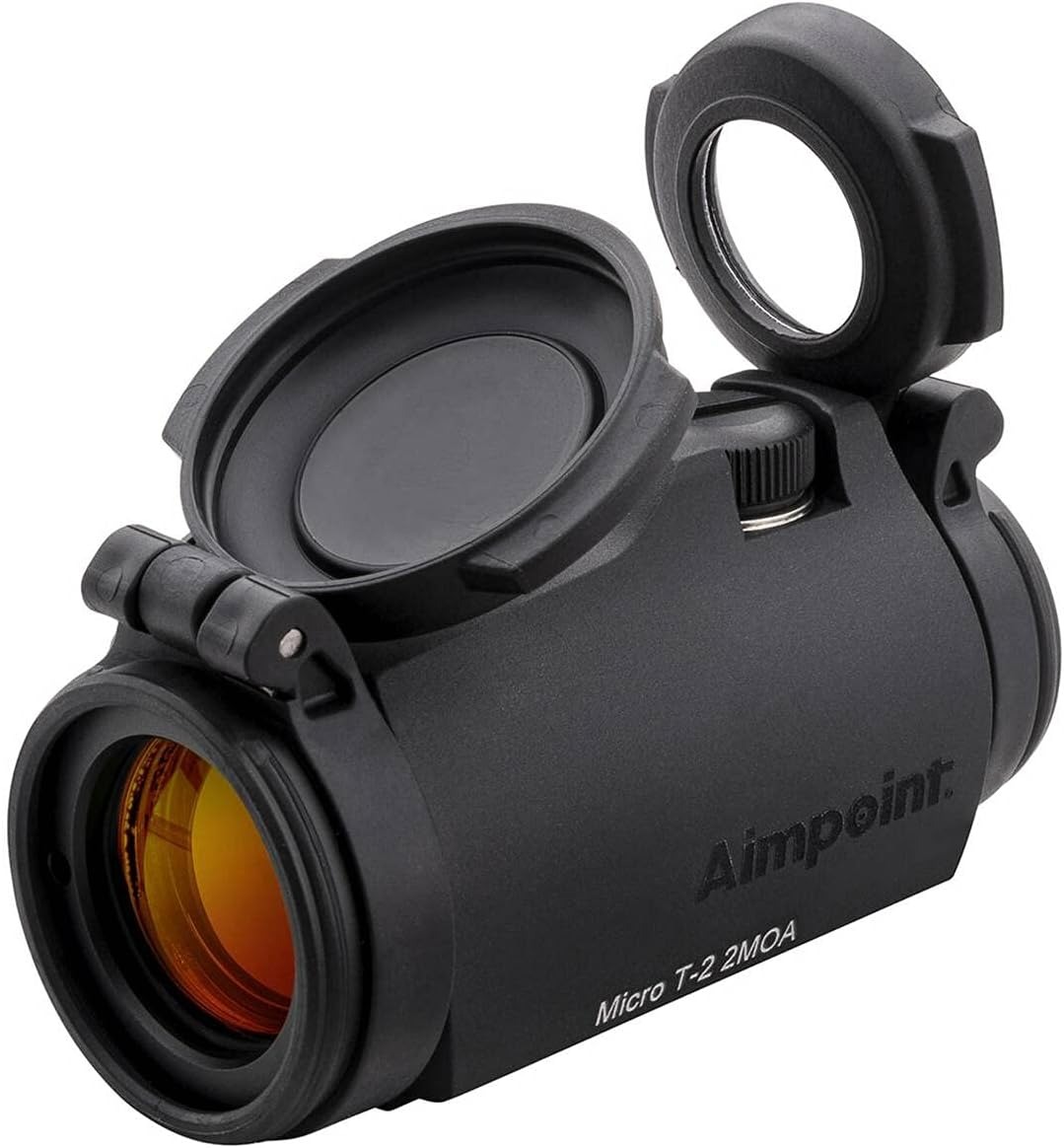
A gold standard micro red dot that balances durability and precision.
Specs
- 2 MOA dot
- CR2032 battery (50,000+ hours)
- Micro footprint
- Fully sealed housing
- Night vision compatible
Pros
- Exceptional battery life
- Minimal parallax shift
- Extremely rugged housing
Cons
- Small window
- Premium price
My hands-on notes
On the MRAD, the T-2 shines as an offset optic. Parallax is nearly nonexistent inside practical distances, and I noticed no shift even when shooting from awkward angles. The deck height depends on mount selection, but co-witness isn’t relevant here—this is best used offset at 45°. The dot remains crisp even under recoil impulse from magnum calibers.
What people say online
Users consistently praise its reliability and “set-and-forget” performance. Many report multi-year battery life and zero failures under harsh use.
Mounting clarity
Uses Micro footprint—easy to mount via offset plates or Picatinny adapters.
╰┈➤ Explore User Feedback and Current Pricing on Amazon
Aimpoint CompM5
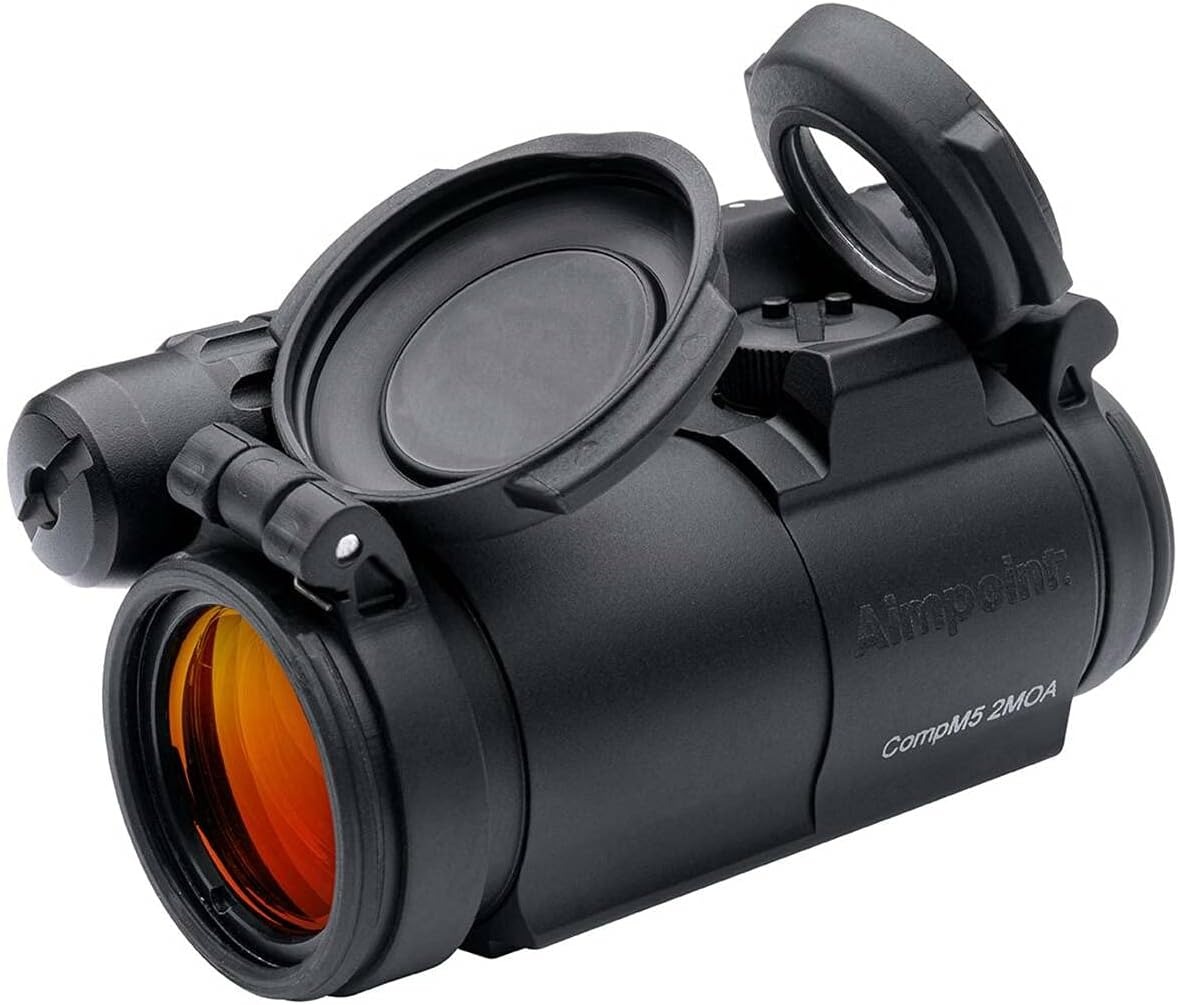
A full-duty optic with unmatched durability and improved ergonomics.
Specs
- 2 MOA dot
- AAA battery
- Micro footprint
- Aluminum housing
- NV compatible
Pros
- AAA battery convenience
- Larger viewing area than T-2
- Military-grade durability
Cons
- Heavier than micro optics
- Expensive
My hands-on notes
The CompM5 handles recoil exceptionally well. I tested it through repeated .300 Win Mag strings, and it held zero perfectly. Parallax remains minimal, though slightly more noticeable than the T-2 at extreme angles. Buttons are tactile even with gloves, which matters in field conditions.
What people say online
Shooters appreciate the AAA battery and reliability. It’s often considered one of the toughest red dots available.
Mounting clarity
Micro footprint ensures compatibility with most offset mounts.
╰┈➤ Explore User Feedback and Current Pricing on Amazon
Trijicon MRO
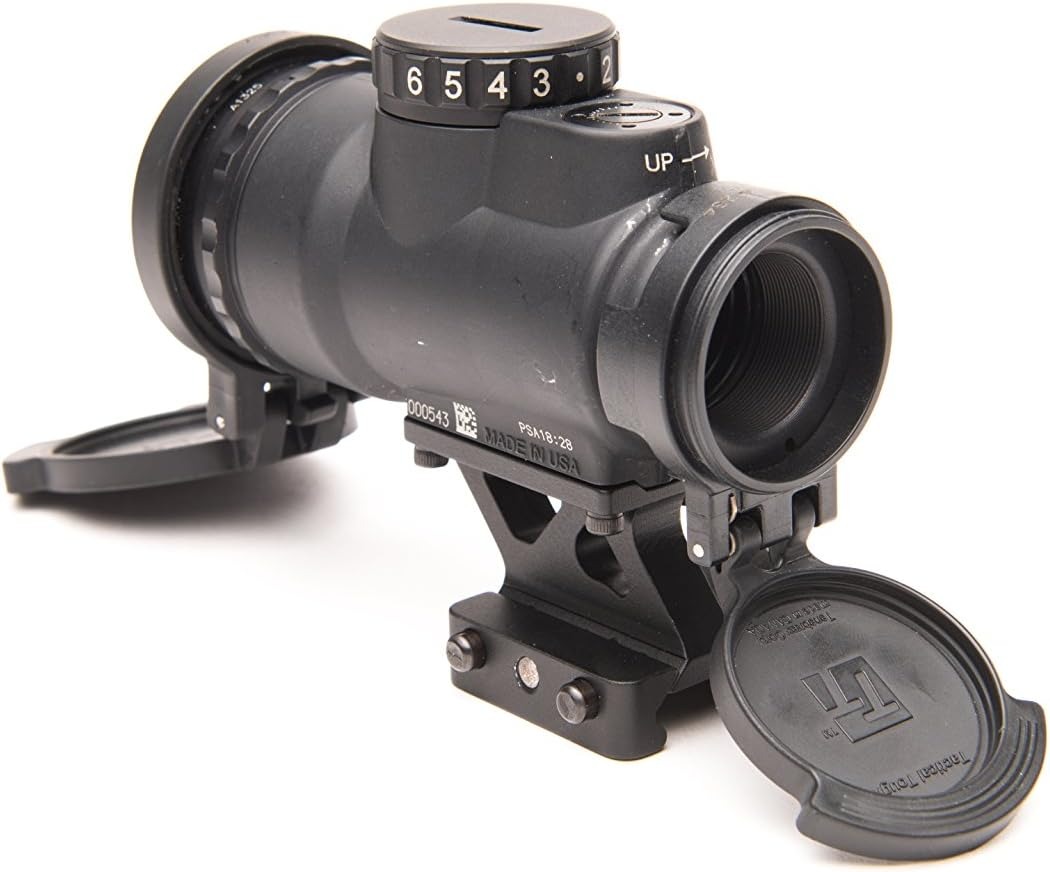
A wide-window optic designed for rapid engagement.
Specs
- 2 MOA dot
- CR2032 battery
- Proprietary footprint
- 5-year battery life
Pros
- Large field of view
- Lightweight
- Clear glass
Cons
- Slight magnification effect
- Noticeable parallax shift
My hands-on notes
The MRO excels in speed. On the MRAD, I used it for rapid transitions and spotting corrections. However, parallax shift is more noticeable than Aimpoint options, especially off-axis. Lens tint is slightly bluish but manageable.
What people say online
Users love the field of view but frequently mention parallax quirks.
Mounting clarity
Requires proprietary mount—ensure compatibility with your offset system.
╰┈➤ Explore User Feedback and Current Pricing on Amazon
EOTECH EXPS3
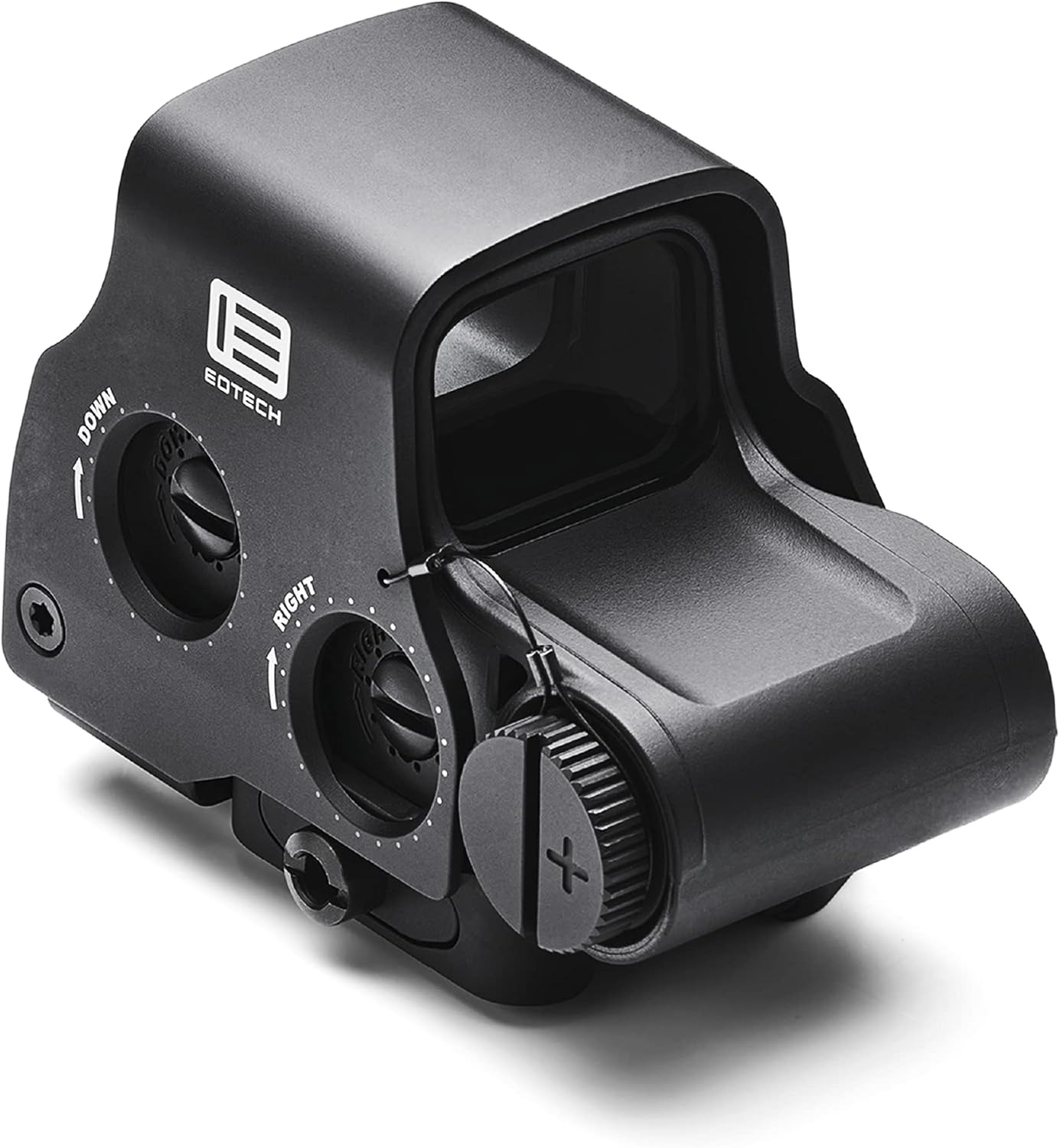
A holographic sight optimized for speed and precision.
Specs
- 1 MOA dot + 68 MOA ring
- CR123 battery
- Picatinny mount
- NV settings
Pros
- Fastest reticle acquisition
- Minimal parallax
- Large window
Cons
- Shorter battery life
- Heavier
My hands-on notes
This is where holographic tech shines. On the MRAD, the EXPS3 is phenomenal for spotting impacts and quick follow-ups. Parallax is extremely well controlled. The large window reduces tunnel effect, and the reticle remains usable even if partially occluded.
What people say online
Highly favored for tactical use and fast shooting. Battery life is the main complaint.
Mounting clarity
Direct Picatinny mount—perfect for top rail or offset setups.
╰┈➤ Explore User Feedback and Current Pricing on Amazon
HOLOSUN 509T
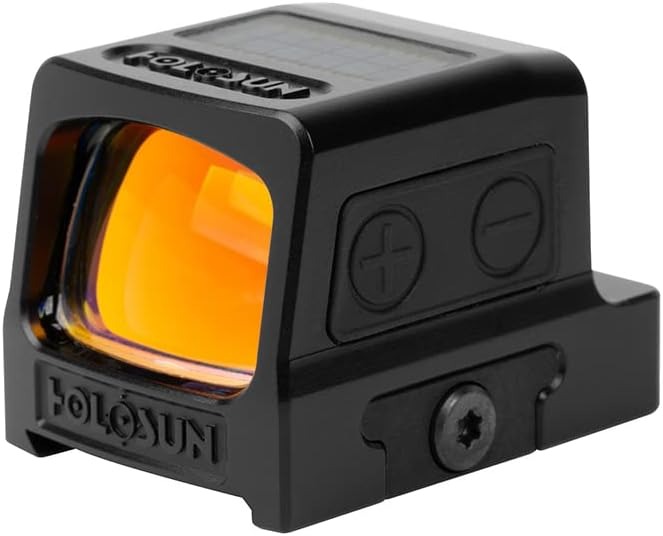
An enclosed emitter optic with strong value and durability.
Specs
- 2 MOA dot / multi-reticle
- CR1632 battery
- Titanium housing
- Enclosed emitter
Pros
- Weatherproof design
- Affordable
- Good battery life
Cons
- Smaller window
- Slight lens distortion
My hands-on notes
The enclosed emitter is a major advantage in dusty or wet environments. On the MRAD, it stayed clear even in adverse conditions. Parallax is acceptable but not class-leading. Button feel is decent but less tactile than Aimpoint.
What people say online
Widely praised for value and durability. Many consider it a budget-friendly enclosed option.
Mounting clarity
Requires RMR adapter plate for Picatinny or offset mounts.
╰┈➤ Explore User Feedback and Current Pricing on Amazon
Vortex AMG UH-1
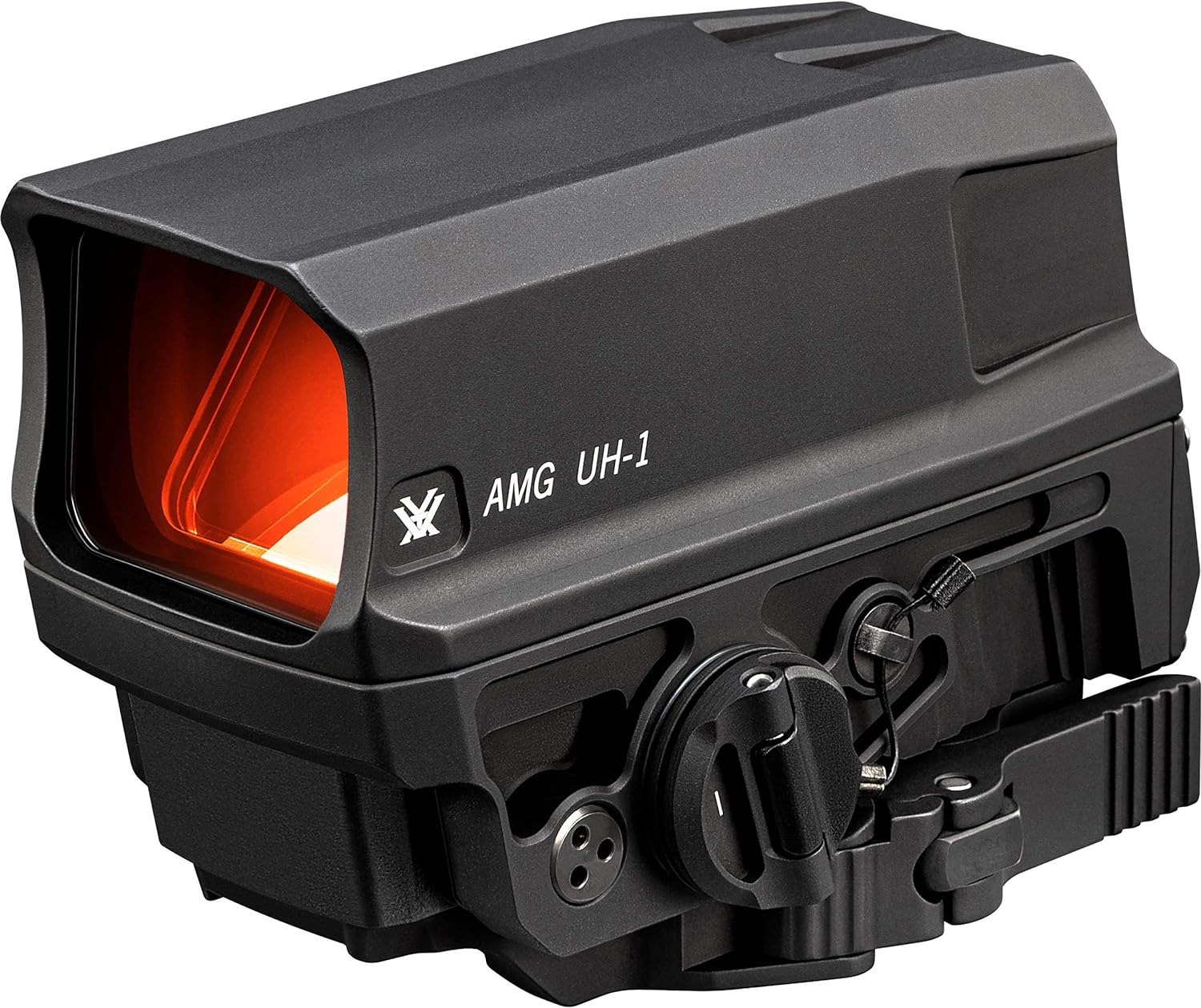
A holographic alternative with robust construction.
Specs
- 1 MOA dot reticle
- CR123 battery
- Picatinny mount
- Rechargeable support
Pros
- Large viewing window
- Durable build
- Clear reticle
Cons
- Heavy
- Battery life lower than LED optics
My hands-on notes
The UH-1 handles recoil well and offers excellent visibility. Parallax is well controlled, though slightly behind EOTECH. The window is distortion-free, and controls are glove-friendly.
What people say online
Users appreciate its ruggedness and value compared to EOTECH.
Mounting clarity
Direct Picatinny mounting—simple and secure.
╰┈➤ Explore User Feedback and Current Pricing on Amazon
How I Tested / Evaluation Criteria
Parallax
I evaluated parallax by shifting eye position at 25–100 yards. Premium optics like Aimpoint and EOTECH showed minimal shift, which is critical when shooting from unconventional positions on a large rifle.
Co-witness / Deck Height
Since the MRAD isn’t a standard co-witness platform, I focused on mount height and offset usability. Deck height influences cheek weld and transition speed.
Durability
Each optic was assessed under heavy recoil simulation. Magnum cartridges expose weaknesses quickly—only the toughest optics maintained zero consistently.
Battery
Battery life matters less on a bolt gun, but reliability still counts. I favored optics that can stay on continuously without concern.
Brightness Range
I tested visibility in bright daylight and low light. NV compatibility is a bonus for advanced users.
Glass Quality
Clarity, tint, and distortion were closely examined. High-end optics maintain neutral color and minimal edge distortion.
Controls Ergonomics
Button feel, especially with gloves, is crucial. Optics with positive tactile feedback performed better in field use.
Mounting Ecosystem
Compatibility with Picatinny and offset mounts is essential. Proprietary systems can complicate setup.
How to Choose the Right Red Dot for This Gun
Choosing a red dot for the Barrett MRAD is fundamentally different from selecting one for a lightweight AR. You’re dealing with a precision platform designed for long-range engagement, but adding a red dot introduces a secondary role: speed.
The first consideration is durability. The MRAD often runs powerful calibers like .300 Win Mag or .338 Lapua, which generate substantial recoil impulse. Not all optics survive this long-term. I always prioritize optics with proven track records—Aimpoint and EOTECH dominate here for a reason.
Next is mounting strategy. Most shooters will use a red dot as an offset optic. This allows quick transitions without breaking cheek weld too drastically. Micro footprint optics excel here because they’re lighter and less intrusive. Larger holographic sights work better if mounted on top for hybrid use.
Parallax performance becomes more important than many realize. On a precision rifle, you’re often shooting from unconventional positions—tripods, barricades, prone angles. Poor parallax control can introduce noticeable point-of-impact shift.
You also need to consider window size vs weight. Larger windows like EOTECH or MRO improve situational awareness but add bulk. Micro optics reduce weight but require more precise head positioning.
Another key factor is emitter type. Open emitters can get blocked by dust or rain, especially in field conditions. Enclosed emitters like the 509T offer reliability in harsh environments.
Finally, think about battery philosophy. If you want a “leave it on forever” optic, Aimpoint dominates. If you prefer superior reticles and don’t mind battery swaps, holographic options are viable.
FAQs
1. Do you really need a red dot on a Barrett MRAD?
Not strictly, but it’s extremely useful for close-range targets and fast transitions.
2. Offset or top-mounted?
Offset is generally better to preserve your primary optic’s function.
3. Can cheaper optics handle MRAD recoil?
Most cannot long-term. Durability is critical here.
4. What dot size is best?
2 MOA offers the best balance between precision and speed.
5. Are holographic sights better than LED dots?
They’re faster and have less parallax but sacrifice battery life.
Conclusion
The Best Red Dot for Barrett MRAD ultimately comes down to durability, mounting flexibility, and optical performance under recoil. From my experience, Aimpoint options dominate for reliability, while EOTECH delivers unmatched speed. If you’re running harsh environments, enclosed emitters like the 509T are hard to ignore.
Choosing the right optic ensures your MRAD remains versatile—capable of both precision and rapid engagement without compromise.